My favourite photographer is the late Galen Rowell, whose books (especially The Inner Game of Outdoor Photography, sadly out of print for UK readers) were my inspiration for returning to photography as an adult. My favourite Galen Rowell photograph is “Last Light At Horsetail Falls” – I have a numbered print of it on the wall at home. It epitomises his approach of visualising the photograph you want to make and putting yourself in the place where you will be able to create the image you have visualised.
So I was thrilled to discover that the US National Park Service, as part of their excellent series of Yosemite videos, has create eight delightful minutes about the natural phenomenon Rowell was able to represent. It makes me realise I have still never made a winter visit to Yosemite; I really need to do that.
Friends don’t let friends use Internet Explorer 6.
Maybe the first time I have ever linked to a Microsoft marketing site with a warm endorsement. Show it to all your friends and tell them about Firefox.
If this is true it will be most welcome, as the insidious cartel-but-we’ve-made-sure-we’re-legal MPEG-LA certainly deserves investigation. They are one of the channels that’s allowing software patents to survive.
Today has been a big landmark for many of the developers at ForgeRock and in the communities in which they participate. Both the OpenAM (identity authentication, authorisation and federation) and OpenDJ (LDAP server) projects have announced new interim releases today to consolidate incremental improvements. For those in any doubt, this work is only happening on the OpenAM and OpenDJ projects and not in any predecessor projects.
The OpenDJ 2.4.1 release includes a number of bug-fixes but adds new features in addition to those added in the earlier full release such as:
A newer version of the Berkeley DB Java Edition database.
The ability to define Collective attributes based on Virtual attributes. This can be used to define Collective attributes (Attributes that are automatically inserted in user entries) based on Group membership for example, or based on the Password Policy enforced for the user.
The OpenAM 9.5.2 release includes a large number of improvements and bug-fixes which have arisen in support of ForgeRock customers, but includes new features such as:
An “update-policies” command in ssoadm
A method to retain the original session during an upgrade, improving availability
An easier way to get hold of realm/auth chain information within JSPs
Both represent a great deal of work by the respective teams – congratulations to them on keeping both projects improving and progressing.
So this is Google’s update to Google’s operating system badly breaking Google’s app for interacting with Google’s service. I thought the whole point of owning every part of the chain was so this didn’t happen?
This is a phenomenal sampler that Amazon just posted for free download by UK customers. Foo Fighters, Manic Street Preachers, Lissie, Kings of Leon, Ting Tings. Far better than the usual freebies!
When you procure proprietary software, you buy a right-to-use license and then a support agreement. But when you buy open source, you already have the right-to-use from the OSI-approved free license, so you should compare the subscription cost with just the cost of a proprietary support agreement. Right?
Wrong! The open source subscription includes all the same elements as the combination of both purchases. In most cases, if you are receiving equivalent value, you should expect to pay similar prices.
I suppose I shouldn’t be surprised by this, but I am shocked at just how blatantly disdainful BSA are of both their customers and of the government. Asserting that open standards are bad for you is so obviously ridiculous – not to mention orthogonal to most of their members’ publicly-stated positions – that BSA just looks ludicrous here.
Corporations do not have a right of personal privacy for purposes of Exemption 7(C) of the Freedom of Information Act, which protects from disclosure law enforcement records whose disclosure “could reasonably be expected to constitute an unwarranted invasion of personal privacy.”
Very important reversal of a bad decision by a lower court that agreed with the extension of the equivalence of corporations and humans into “personal privacy” which would have made the Freedom of Information Act (and thus most transparency) ineffective. There’s also a good analysis on the same site.
Host to the Firefox browser and the Thunderbird mail client among many other projects, the Mozilla Foundation is one of the largest and most significant open source projects. Long-term contributor and employee Gervase Markham has kindly provided the data for an open-by-rule scorecard for Mozilla.
The goal of the open-by-rule benchmark is not to judge the effectiveness or otherwise of any particular project. It is to examine the project governance and establish whether it is an example of good governance. A project may succeed despite flawed governance, with the good judgement and goodwill of participants overcoming possible opportunities for closed behaviour.
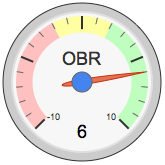
As usual, the data and draft text is contributed by a community insider who has made suggestions about scoring, but the score is mine and text that’s not in quote marks should be assumed to be mine too. Mozilla scores +6 on the scale -10 to +10 and is an open-by-rule community (as well as a functionally open community) despite some issues with closed overall leadership rules.
Mozilla’s ultimate authority is a board of 5 people. This board is not elected, but was chosen by the senior group who set up the Foundation. They do not exercise day-to-day governance over the project but approve direction, big new initiatives, and budgets. Because they are not elected or subject to challenge, this is clearly not an open organisation. Score -1.
Mozilla’s day-to-day heads are Mitchell Baker on the organizational side, and Brendan Eich on the technical side (both are also on the board), and Mark Surman for the Foundation itself. Even when Netscape dominated the project and sacked Mitchell, she remained head of the project (rather to their consternation). People rise and fall in the organization based on merit, not employment – although the two are hard to separate, as meritorious people often get hired, and Mozilla hires already-meritorious people from other fields! Despite the big hiring budget leading to a preponderance of employees of Mozilla, it is still a meritocracy and there are plenty examples of leadership from outside the ranks of those employed by the Foundation, so this scrapes a +1.
Mozilla has strong leadership, with an appointed set of leaders (known as ‘module owners’) who have control in their areas, with the (very rarely exercised) right of appeal to Mitchell or Brendan. The clearest example of this is in the user interface, where the team spends a lot of its time saying “No” to other people. This is an oligarchy – leadership is exercised rather deferred to chatter or “democracy” by the masses – and scores +1 as a result.
The overall score of +1 reflects a somewhat closed leadership strategy for an organisation that’s otherwise so committed to inclusivity and transparency. It works, but it is in some part due to great people filling the leading roles and overcoming the challenge of the closed top-level leadership rules.
MPL 1.1+/GPL 2.0+/LGPL 2.1+, with the possibility in the future of switching to the MPL 2.0+ when it is released. (The MPL 2 is a modern license with inbuilt compatibility with the other two currently used.) All of these licenses have patent protection. Mozilla takes a lead role in writing and advising upon the writing of open source licenses.
Mozilla does not require copyright assignment. There is a Committers’ Agreement which requires people committing code to have the rights necessary to contribute it, or to investigate its provenance if they did not write it. But the copyright on all our code remains with the authors (or the Foundation for Mozilla employees).
The Firefox and Mozilla trademarks are owned by the Mozilla Foundation, and carefully controlled to make sure that good uses are promoted and bad uses are not. However, what is “good” or “bad” is ultimately the Foundation’s decision, and other community members do not have trademark rights equal with the Foundation.
Gervase says: “I have publicly disagreed with Simon’s points here, but this is his set of criteria, not mine. I am scoring us as 0 because I think the trademark policy is not actively detrimental to the project, but Simon may wish to score it differently.”
Simon says: “Mozilla was a pioneer here and the policy does not actually privilege a community member above all others so actually I’m tempted to score it as +1, but there’s enough controversy around the subject to just about make me agree with Gervase’s score here. “
Gervase says: “The Mozilla project is very open about its day-to-day procedures and planning, but the fast-moving nature of the field means that roadmaps which look even 6 months ahead tend to be very vague and aspirational. We also release “when it’s done” and so you won’t find a date-based release schedule either.”
Simon says: “The lack of a date-based release schedule is a concern. When releases are determined based on someone’s judgement that “they are ready” there is too much scope for abuse. It’s far better to have firm release dates and include or exclude features based on their owners’ public assessment of readiness (the “release train” pattern) as this is far harder for any individual to “game”. However, the results are good so I’m scoring this as 0 and I gather there are moves afoot to start naming the next release date in advance which would roll the score over to +1.”
0
Multiple co-developers
Developer Credits
(Not a comprehensive list, and not everyone on the list is still active.)
Gervase says: “Mozilla is one of the largest open source projects in the world. We employ (I think) over 400 people, and have several thousand more active volunteers. (Good community metrics are hard to come by, something we are working to change.)”
Simon says: “I’m actually concerned by the number of key contributors who are employed by the Foundation; an open-by-rule community should have greater diversity. All the same, my experience at Sun was that Mozilla was very happy for Sun staff to take key roles in Mozilla projects and as such I’d score it +1 for diversity based on that experience.”
Mozilla code is regularly forked to produce other browsers or related software, from the minor changes of GNU IceCat to the much larger changes of the Songbird media player. Some of these organizations or companies send back patches, some do not. There is even Mozilla code in competing browsers, e.g. Chrome on Linux uses NSS, the Network Security Services module.
All project communication is done in the open, and all meetings are open for dial-in or to be viewed as streaming video on Air Mozilla. There are a wide range of forums, available via multiple access methods – email, news and web. There is a forum specifically for governance discussions.You can, of course, track all bugs and commits (with the exception of some information about security bugs, for a limited time) in Bugzilla and via our the SCM systems.
+1
Summary (scale -10 to +10)
+6
The full series of articles is summarised on the Essays page.
LibreOffice Conference
Excellent news – LibreOffice will be holding a community conference in Paris in October. I’ll try to attend, maybe I’ll see you there?
Interesting interview with Jono that’s worth reading. Naturally he doesn’t go near the really difficult topics like the decision to redirect Amazon commissions from Banshee away from GNOME, but his overall approach to community issues is educational.
Looking through the list of domain names I’ve acquired over the years, I realised I had a couple that weren’t well used that could be handy for people who want to mention my web site to others. So I’ve just set forwarding on these domains:
For those crying “Webmink Us!”, visiting webmink.us will take you to the Events page, as will webmink.me
For those saying they need Webmink Info, visiting webmink.info will take you to the About page.
For those looking for my articles about software freedom, visiting SoftwareFreedom.net will take you to the Essays page.
There are reminders at the bottom of those pages. Pass it on!
All views expressed on this blog are those of Simon Phipps and do not necessarily reflect the views of any other entity, including current and former employers and clients. See my full disclosure of interests.






 Wild Webmink